Background:
When TAG arrived at CDC, the most common request from scientists was not new technology. It was access to people who could actually help them.
Many laboratories had operated for years without consistent technical support or clear escalation pathways. Some researchers reported IT issues that had gone unresolved for nearly two decades. Scientists working in biosafety environments were required to physically enter labs and wear full protective equipment simply to check results or monitor experiments. The infrastructure existed. The support did not.
Before TAG’s involvement, CDC labs were running on fragmented help desk systems with limited escalation options, non-standard equipment built up over decades of independent research missions, and no reliable pathway for scientists to get answers without navigating multiple layers of bureaucracy. The challenge was not just outdated technology. It was that researchers had stopped expecting things to get better.
Objective:
CDC needed more than an IT upgrade. It needed a partner willing to understand what was actually happening inside those labs before recommending anything.
TAG’s objective was to modernize laboratory IT infrastructure across multiple campuses while protecting the research workflows that scientists depended on. Success was never going to be measured by systems deployed. It was going to be measured by whether researchers felt supported enough to trust the process.
Scope of Work:
TAG provided complete IT support and modernization services across 200 CDC laboratories, including:
ISLE system deployment and configuration across multiple campuses, secure remote access enabling scientists to monitor experiments and review analytics without entering controlled environments, cloud-based data storage and transfer solutions for large datasets, Active Directory and Azure identity management, CyberArk and KeyFactor security implementation, standard operating procedures for ongoing lab IT support, and project management and technical writing services throughout.
Service areas: IT Support and Systems Integration, Cybersecurity, Process Optimization, Project Management.
Approach
Most IT modernization efforts fail not because of technology. They fail because the people implementing the technology never understood the problem they were solving.
TAG’s team entered the engagement listening first. What they found was that each laboratory reflected decades of independent evolution tied to specific research missions. No two labs were the same. In one case, a laboratory’s performance issues had nothing to do with its research systems. The root cause was shared network bandwidth being consumed by unrelated security camera traffic. Researchers had assumed modernization had introduced instability. The real problem had existed for years before TAG arrived.
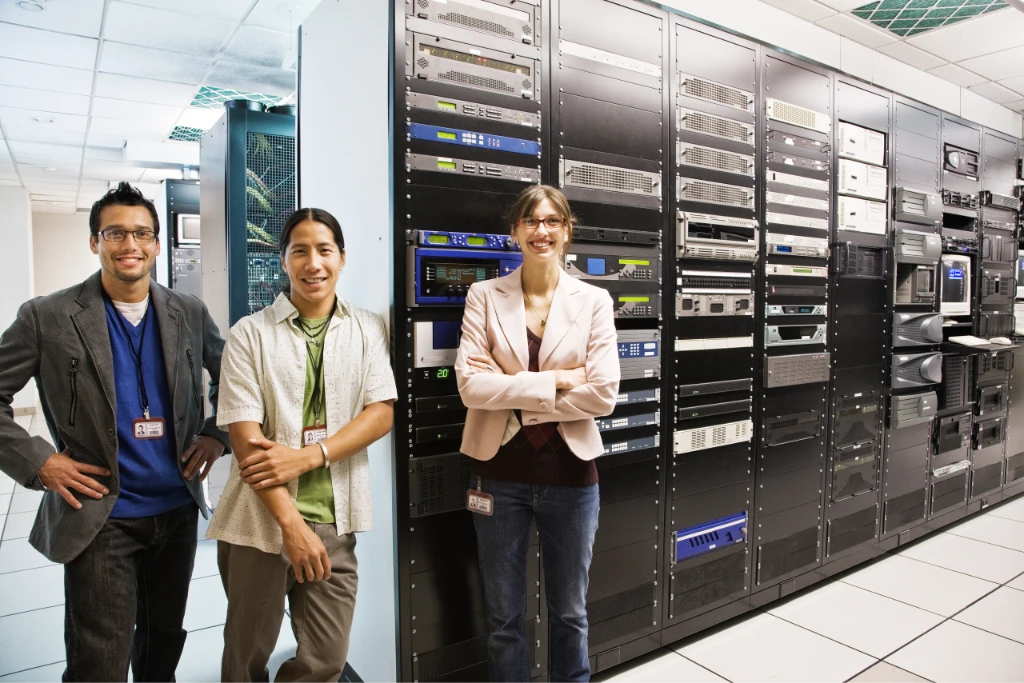
TAG deployed a hybrid support model combining centralized ticketing through ServiceNow with embedded laboratory liaisons who were reachable directly via Teams and email. Scientists no longer had to navigate multiple support layers to get help. They had direct access to people who knew their systems, understood their workflows, and could translate between scientific and technical language.
That accessibility changed everything. In situations where issues had gone unresolved through multiple support tiers, TAG engineers diagnosed problems within minutes by simply asking researchers to describe what they were actually trying to do.
Results
200 laboratories modernized across three states
15,000+ IT support requests completed across AD/Azure, KeyFactor, and CyberArk
Organizational trust built in weeks rather than the typical year-long onboarding cycle
Security permissions granted months faster than historical norms
Scientists gained secure remote access to biosafety laboratory systems, eliminating unnecessary physical exposure and enabling collaboration across geographically dispersed locations
Independent technical assessment of a failing temperature monitoring system is estimated to have saved the government millions of dollars by preventing continued investment in an ineffective solution
CDC Excellence in Laboratory Quality and Research Award, FY2023 and FY2024 (two consecutive years)
What this actually enabled
The greatest achievement was not deploying infrastructure. It was restoring confidence.
Scientists who once struggled to get a response gained direct access to a team that listened, solved problems quickly, and treated their research as the priority. Systems stayed operational during critical reporting periods, allowing CDC teams to continue delivering data used for national decision-making. Remote access transformed the day-to-day experience of researchers who previously had to choose between entering a controlled environment and getting their work done.
Researchers called it a game changer. We call it doing the job the way it should be done.
What we learned
“Modernization teams must listen before deploying solutions. Many problems labeled technology failures are actually environmental or operational constraints uncovered only through direct engagement with users.”
“Responsiveness builds organizational trust faster than technical capability alone.”
“Technology alone does not drive transformation. Understanding does.”